Is it cheaper to buy or rent a campervan in South America?
At overAndes, we want to help you plan your South American adventure from the very beginning, and one of the most common questions during the planning stage is: Should I buy or rent a campervan?
The answer depends on one key factor: how long you’re traveling.
In this guide, we break down the real costs, pros and cons, and help you decide what actually makes the most sense for your trip. And if you’re one of those travelers who believes buying is the better option, we’re here to help you through the entire process.
🚐 Quick answer
- Trips under 4–6 weeks → Renting is usually cheaper
- Trips over 2–3 months → Buying is usually cheaper
This isn’t just theory — it’s how most overlanders in South America actually travel.

💸 How much does it cost to:
Rent a campervan?
Rental prices in South America vary by season, vehicle type, and location, but here’s a realistic range:
- range of 50.000 CLP –250.000 CLP per day ($57–$280 USD)
- High season or 4×4 campers can go even higher
- Deposits: every company it’s different but you will need to consider a deposit of $1.500.000 CLP – 2.000.000 CLP+ often required.
👉 For example:
- 15-day trip → ~750.000 to 3.750.000 CLP
- 1 month → easily 1.500.000– 7.500.000 CLP ($1,690–$8,420 USD)
And that’s just the rental — not including fuel, campsites, tolls, insurance or extras.
Also note:
- Many rentals include mileage limits (e.g. 250 km/day)
- Most rental companies require you to return the vehicle to the same place where you picked it up. Very few offer the option to drop it off in a different destination within the country, and this usually comes with a high additional fee.
- Each day has a high cost. Even if you decide to stay parked in one place and enjoy the scenery for a few days, you know in the back of your mind that you’re paying for the vehicle every single day, whether you move or not.
- Prices increase significantly in Patagonia and during peak season. The high season in Patagonia runs from September to March, when the weather is at its best. During this period, rental prices adjust to demand—especially in the summer months (January and February), when rates go up.
Buy a campervan?
Buying requires a higher upfront investment, but the key difference is this:
👉 You can sell it later and recover much of your money.
Typical scenario:
- Buy vehicle: $5,000 – $30,000 USD
- Travel for months
- Resell: recover 60–90% of the value
So your real cost becomes:
👉 $1,000 – $4,000 USD total for several months of travel
Other associated costs:
- RUT: In order to buy a vehicle in Chile, you need to obtain a foreign investor RUT. We can help you get it — our service costs CLP 70,000 if you do it in Chile, or CLP 90,000 if you do it from abroad (if you apply from abroad, please also consider the extra cost of sending the document from your country to Chile).
- Notary fees and taxes: When transferring the vehicle title, you will need to pay taxes and notary fees. Consider at least CLP 150,000 for this item.
- Vehicle documents: Every year you will need to renew your vehicle documents, including the mandatory insurance (SOAP), technical inspection, and circulation permit. Consider between CLP 50,000 and CLP 150,000 per year, depending on the value of your vehicle. Lower-value vehicles pay a lower circulation permit fee.
Also note:
- It’s important to consider that mechanical issues or necessary maintenance may arise along the way, so choosing the right vehicle at the time of purchase is crucial.
- Finally, depending on when you sell the vehicle, demand may vary. If you sell during low-demand months, you should expect that the sale could take a few months, meaning the return on your investment may take longer to come back.
⚖️ Buy vs Rent: Pros and Cons
🚐 Renting a campervan
✅ Pros
- Fast and easy (pick up and go)
- Less paperwork or bureaucracy
- No need to sell later
- Maintenance usually included
❌ Cons
- No money returns
- Expensive over time
- Fixed rental dates
- Less flexibility
- Mileage limits and restrictions with border crossings.
- Everyday counts.
- Price get higher in high season.
- If you need to return to your home country due to an emergency, no refund will be provided.
👉 Best for:
- Short trips (1–6 weeks)
- Travelers with limited time
🔑 Buying a campervan
✅ Pros
- Much cheaper for long trips
- Full freedom (no return date)
- Ability to resell and recover money
- More flexibility with routes and borders
- It’s an investment, not an expense.
- If you buy and sell with assistance the process it’s easy.
- You can store the vehicle during the low season and come back the following year to continue your trip.
❌ Cons
- Requires a little more paperwork (in Overandes we can assist you with this, so will be easier)
- Takes time to buy and sell (For the purchase, allow around 3 days to obtain your RUT and an additional day to complete the title transfer. For the sale, it can take a few months depending on the timing and demand).
- You handle maintenance.
👉 Best for:
- Trips longer than 2-3 months
- Overlanders and slow travelers
🌎 Why We Recommend Buying
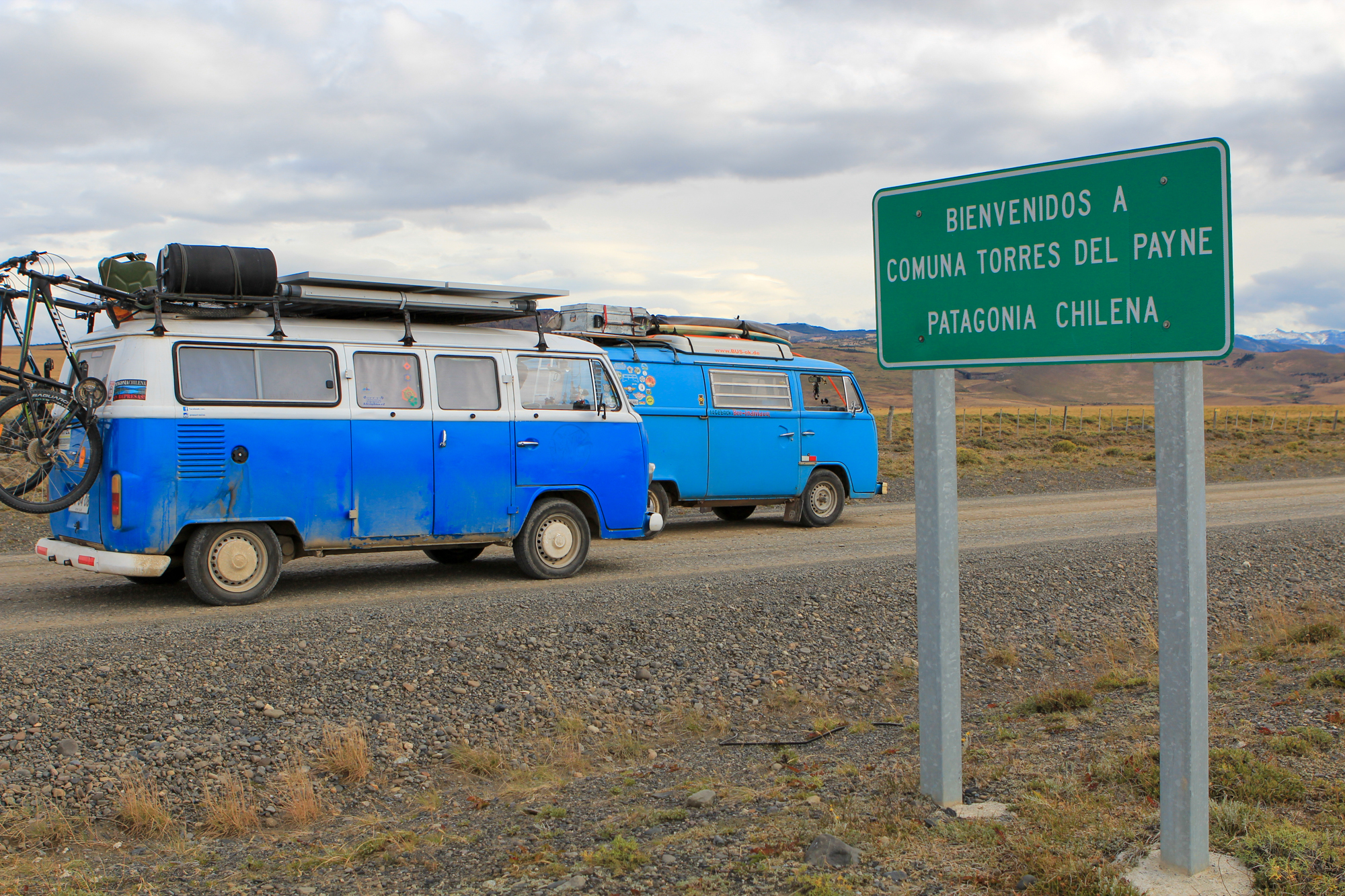
Back in 2014, we bought a Volkswagen Kombi and spent a full year traveling through Chile and Argentina. That journey opened the door to an experience unlike anything we had ever lived before, despite all the trips we had done in the past.
Traveling with your home, carrying only what you truly need, solving problems along the way, planning routes, and allowing yourself to be surprised by the road — it was the closest we had ever felt to the freedom we were searching for.
We had the possibility to stop whenever we wanted. We could take the time to hear other people’s stories, meet travelers and locals, and realize that traveling was no longer only about the landscapes that amazed us, but also about the people the road introduced us to. Some of our most beautiful memories from that time are connected to the people we met because we had the freedom to stop, stay, and truly experience a place.
In the end, traveling is not only about seeing landscapes — it’s about experiencing places and their way of life. And that only happens when you have the freedom to stay. If we had been rushing to follow strict itineraries, I don’t think the journey would have been the same.
— Dani from overAndes
🤝 Need help buying or selling a campervan?
At overAndes, we help travelers:
- Buy a vehicle legally in Chile, you can check our stock here
- Get their RUT (tax ID). If you want to start the rut process follow the instructions here.
- Travel across South America
- Sell the vehicle at the end of the trip.
👉 So you can travel longer, cheaper, and with full freedom.
We hope this guide has helped give you a general idea of the main differences between buying and renting a vehicle in Chile to travel around South America. If you have any further questions, we’d be happy to help you out—feel free to reach out to us on WhatsApp here.